Influenza can stay active on indoor surfaces for hours and sometimes days, which makes shared touchpoints more important than many workplaces realize.
Why Surface Survival Still Matters Indoors
Influenza spreads mainly through respiratory droplets and aerosols, but contaminated surfaces still matter in real indoor settings.
Norovirus can survive on surfaces for days to weeks, making even small areas of contamination a serious infection risk.
Why Norovirus Lingers Longer Than Most Viruses
Norovirus is not like most common viruses people think about. It doesn’t break down quickly once it lands on a surface.
Viruses don’t disappear quickly—many remain active on surfaces long enough to matter in real-world environments.
What This Means for Everyday Spaces
Viruses don’t behave the same way across all environments. Some die off quickly, while others remain viable long enough to transfer from surfaces to hands and then into the body.
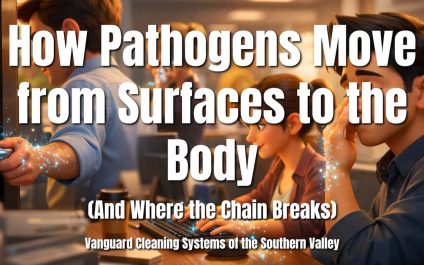
Most surface-related infections follow a simple path: surface → hand → face → entry into the body—but every step in that chain can be interrupted.
Why This Pathway Still Matters in Modern Workplaces
Walk through any office, school, or shared facility and you’ll see the same pattern: people touching doors, keyboards, phones, breakroom appliances, and shared equipment.
A fomite is an overlooked driver of infection risk in everyday environments—especially in shared workplaces.
Why Fomites Matter More Than You Think
Most people think about illness spreading through the air or direct contact. What often gets missed is the role of everyday objects.
Surface transmission is one of the most overlooked pathways for how infections move through a workplace—quiet, indirect, and driven by everyday contact.
Understanding Surface Transmission in Real Environments
Surface transmission, also known as fomite transmission, occurs when microorganisms left on objects are transferred to a person through touch.
Seasonal shifts quietly reshape how clean—or unclean—a workplace becomes.
Understanding Seasonal Transitions and Workplace Cleanliness
Workplaces rarely stay static. Weather patterns, human behavior, building conditions, and operational cycles all change throughout the year.
Seasonal shifts change indoor air, traffic patterns, and comfort—and those changes can quietly influence hand hygiene and respiratory infection risk in office settings.
Introduction
Office hygiene is not just a matter of reminders on the wall or a sanitizer bottle at the front desk.
A clean and well-organized workspace does more than create a positive first impression—it directly shapes morale, performance, and long-term organizational stability.
The Measurable Link Between Physical Environment and Workplace Performance
The physical work environment influences how people think, feel, and perform throughout the day.
Cold weather changes how buildings breathe, how moisture behaves, and how respiratory infections spread—forcing shared offices to rely on tighter environmental control.
Winter Indoor Air Quality in Shared Office Buildings: Humidity, Ventilation, and Cleaning Strategies That Reduce Risk
Shared office buildings operate under different environmental pressures during winter.
We use cookies to ensure that we give you the best experience on our website. Unless you've selected "Allow", our website will deactivate the cookies session by default.